Uneven texture, firmness, or small bumps after lip filler injections are among the most common concerns patients notice during the healing process. Because the lips contain delicate soft tissue that reacts quickly to injection-related swelling, temporary irregularities can sometimes develop even when the procedure is performed correctly. In many cases, these changes improve naturally as inflammation subsides and the filler settles into the tissue.
The challenge is that not all lumps after lip fillers represent the same process. Some are caused by normal post-procedural swelling, while others may involve superficial filler placement, product accumulation, inflammatory reactions, or migration. Distinguishing between expected healing and a potential complication depends on factors such as timing, texture, pain, discoloration, and persistence.
Lip filler products also behave differently depending on their physical properties and how they interact with the surrounding tissue. Certain formulations integrate more smoothly, while others may create firmer areas if placed too superficially or injected in excessive volume. Patients researching filler-related complications often review discussions about filler migration to better understand how placement and tissue behavior influence long-term results.
Understanding when lumps are part of normal recovery and when they may require evaluation is important for both safety and cosmetic outcomes. Careful assessment of symptoms, healing progression, and filler behavior helps determine whether observation, massage, dissolution, or corrective treatment is the most appropriate next step.
Why Lumps Can Develop After Lip Fillers
The lips are highly vascular and sensitive structures that respond quickly to injections and tissue manipulation. Following filler placement, localized inflammation develops as part of the normal healing response. This temporary swelling can create uneven texture or firmness that may feel like small lumps beneath the skin. In many cases, these irregularities gradually improve as fluid retention decreases and the filler integrates into the surrounding tissue.
Because the lips move constantly during speaking, eating, and facial expression, the filler is also exposed to continuous mechanical stress during the healing phase. This can temporarily influence how the product settles within the tissue. Mild asymmetry or unevenness during the first days after treatment is therefore relatively common, particularly in areas where swelling is more pronounced.
Swelling and Inflammatory Response After Injection
Any injectable procedure triggers a localized inflammatory response. Small blood vessels become more permeable, allowing fluid to accumulate within the tissue. In the lips, this swelling may create areas that feel firm or uneven for several days after treatment.
The extent of swelling varies depending on factors such as injection technique, product type, individual anatomy, and previous filler history. Some patients experience minimal swelling, while others may develop more significant edema that temporarily changes lip shape and texture.
Filler Settling Within the Lip Tissue
Hyaluronic acid fillers do not instantly integrate into the tissue after injection. During the early recovery period, the product gradually distributes and adapts within the soft tissue layers. This settling process can temporarily create localized firmness or subtle ridges that improve over time.
Movement of the lips during daily activity may also influence how the filler disperses during the initial healing phase. For this reason, many post-treatment instructions emphasize minimizing pressure on the lips during the first several days. Patients interested in optimizing recovery often review guidance related to sleeping after lip fillers to reduce unnecessary compression and swelling.
Product Characteristics and Injection Depth
Different fillers behave differently within lip tissue. Softer fillers designed for flexibility typically integrate more smoothly, while firmer or more cohesive products may feel slightly more structured during early healing. Injection depth is also critical. Product placed too superficially may become more visible or palpable beneath the thin lip tissue.
Uneven placement, excessive product volume, or concentration of filler in a single area can increase the likelihood of noticeable lumps. Proper product selection and precise placement help reduce these risks and support smoother integration during recovery.
Distinguishing Between Swelling and True Nodules
Not every irregularity after treatment represents a true filler complication. Temporary swelling often produces soft or mildly firm areas that gradually improve over one to two weeks. True nodules, however, are typically more persistent and may remain firm beyond the expected healing period.
Understanding this distinction is important because treatment recommendations differ significantly. Temporary swelling may only require observation, while persistent nodules or inflammatory reactions may require professional evaluation and corrective treatment.
When Lip Filler Lumps Are Considered Normal
Temporary lumps or unevenness after lip filler injections are often part of the normal healing process. Because the lips are highly sensitive and prone to swelling, mild irregularities frequently appear during the first several days after treatment. These changes are usually related to inflammation, fluid accumulation, and the gradual settling of the filler rather than a true complication.
The appearance and texture of the lips may fluctuate throughout recovery. Swelling is rarely perfectly symmetrical, which means one side of the lips may temporarily appear firmer or more elevated than the other. In most cases, these differences improve progressively as healing continues.
Swelling vs Actual Filler Lumps
One of the most common sources of confusion is distinguishing between swelling and true filler nodules. Swelling generally feels soft or mildly firm and often changes throughout the day. It may become more noticeable in the morning or after pressure is applied to the lips during sleep.
True nodules are usually more localized and persistent. They tend to maintain the same shape and firmness over time rather than gradually softening. During the early recovery period, however, it can be difficult to accurately distinguish between these two processes because inflammation temporarily alters tissue consistency.
Why Lips May Feel Firm After Treatment
Firmness after lip filler injections is not uncommon during the initial healing phase. The filler itself occupies space within the tissue, while surrounding inflammation increases pressure and fluid retention. Together, these changes can create the sensation of tightness or small palpable areas beneath the skin.
Certain filler products may also feel slightly firmer immediately after placement before fully integrating into the tissue. As swelling decreases and the product settles more evenly, the lips generally begin to feel softer and more natural.
Typical Recovery Timeline
Most post-treatment swelling peaks within the first 24 to 48 hours after lip filler injections. During this period, lumps, firmness, or asymmetry may appear more noticeable. Improvement typically begins within several days as inflammation gradually subsides.
The majority of mild irregularities improve significantly within one to two weeks. Residual firmness may persist slightly longer depending on the filler type and individual healing characteristics. Patients who continue to notice hard, painful, or persistent nodules beyond the normal recovery window may require further evaluation.
Bruising, Edema, and Temporary Asymmetry
Bruising and localized edema can also contribute to uneven texture during healing. Small collections of fluid or minor bleeding beneath the skin may temporarily alter the contour of the lips and create the appearance of lumps.
Because healing rarely occurs identically on both sides, temporary asymmetry is relatively common during the early recovery period. Patients who already have subtle anatomical differences may notice these variations more prominently while swelling is present. Understanding how normal inflammation affects lip appearance can help reduce unnecessary concern during the first stages of healing.
Signs That Lip Filler Lumps May Be a Complication
Although many irregularities after lip filler injections are temporary, some symptoms may indicate a complication rather than normal healing. Persistent hard nodules, progressive swelling, significant pain, or discoloration can suggest that the filler is not integrating properly or that an inflammatory or vascular issue has developed. Recognizing these warning signs early is important because some complications require prompt evaluation and treatment.
The timing of symptoms also provides important clinical information. Lumps that gradually soften during the first one to two weeks are often related to normal healing. In contrast, areas that become firmer, more painful, or increasingly visible over time may suggest a different underlying process.
Persistent Hard Nodules
One of the most concerning findings after lip filler treatment is a firm nodule that does not improve with time. Unlike temporary swelling, persistent nodules typically remain localized and maintain a consistent texture. They may result from superficial filler placement, excessive product concentration, or inflammatory tissue response around the filler material.
In some cases, these nodules remain stable and asymptomatic, while others become progressively more noticeable. Areas that continue to feel firm beyond the expected recovery period often require professional assessment to determine whether massage, observation, or dissolution is appropriate.
Pain, Blanching, or Skin Color Changes
Pain that worsens after treatment rather than improving can indicate a more serious complication. Significant tenderness combined with blanching, pale discoloration, or darkening of the skin may suggest compromised blood flow. Vascular complications are uncommon but require immediate medical evaluation because prolonged interruption of circulation can damage surrounding tissue.
Patients should also monitor for unusual warmth, spreading redness, or rapidly increasing swelling, which may indicate infection or significant inflammatory reaction.
Delayed Inflammatory Reactions
Not all complications occur immediately after injection. Delayed inflammatory nodules can appear weeks or even months after treatment. These reactions may develop due to immune system activation, infection, or biofilm formation surrounding the filler.
Delayed nodules are often firmer and more persistent than early swelling. They may also fluctuate in size or become tender during periods of systemic illness or inflammation. Management depends on the underlying cause and may involve antibiotics, corticosteroids, hyaluronidase, or additional medical evaluation.
Migration and Uneven Product Distribution
Filler migration occurs when the injected product moves outside the intended treatment area. This may create fullness above the lip border, uneven contours, or persistent irregular texture. Migration can result from excessive product volume, inappropriate placement depth, or repeated pressure on the lips during healing.
Patients concerned about changes in lip contour or texture sometimes compare their symptoms with discussions about lip filler lumps under the skin to better understand how migration and uneven product distribution may appear clinically.
When Professional Evaluation Is Recommended
Persistent lumps, worsening asymmetry, severe pain, or skin discoloration should always be professionally evaluated. Early assessment helps determine whether the issue represents prolonged swelling, filler malposition, inflammatory reaction, or vascular compromise.
Patients seeking correction or assessment of uneven filler distribution often explore treatment approaches used in lip filler procedures, where individualized planning helps reduce the likelihood of complications and supports more balanced outcomes.
How Lip Filler Lumps Are Treated
Treatment for lip filler lumps depends on the underlying cause, severity of symptoms, and how long the irregularities have been present. Mild swelling or temporary firmness often improves naturally as healing progresses, while persistent nodules or inflammatory complications may require more active intervention. Proper evaluation is important because different types of lumps respond to different treatment approaches.
Management strategies range from simple observation and massage to enzymatic dissolution or advanced imaging-guided correction. Selecting the appropriate treatment depends on identifying whether the irregularity is caused by swelling, filler accumulation, migration, inflammation, or vascular compromise.
Observation During Early Healing
In many cases, early irregularities after lip filler injections improve without intervention. Swelling and localized firmness commonly decrease during the first one to two weeks as inflammation resolves and the filler settles into the tissue.
Observation is generally appropriate when the lumps are soft, improving gradually, and not associated with significant pain or skin discoloration. During this phase, patients are usually advised to avoid excessive pressure, manipulation, or additional trauma to the lips.
Massage and Manual Redistribution
Gentle massage may sometimes help redistribute filler that has accumulated unevenly within the tissue. This approach is typically most effective during the early healing period before the filler fully integrates.
However, massage is not appropriate for all situations. Excessive manipulation may worsen swelling or increase irritation if inflammation is already present. For this reason, massage recommendations should ideally be guided by the treating injector rather than performed aggressively without evaluation.
Hyaluronidase Dissolution
Persistent nodules or excessive filler volume are often treated with hyaluronidase, an enzyme that dissolves hyaluronic acid filler. This approach can help correct superficial placement, asymmetry, migration, or overfilled areas.
The amount of hyaluronidase used depends on the type and volume of filler present. Because the enzyme can also affect naturally occurring hyaluronic acid within the tissue, treatment is typically performed conservatively and adjusted gradually when needed.
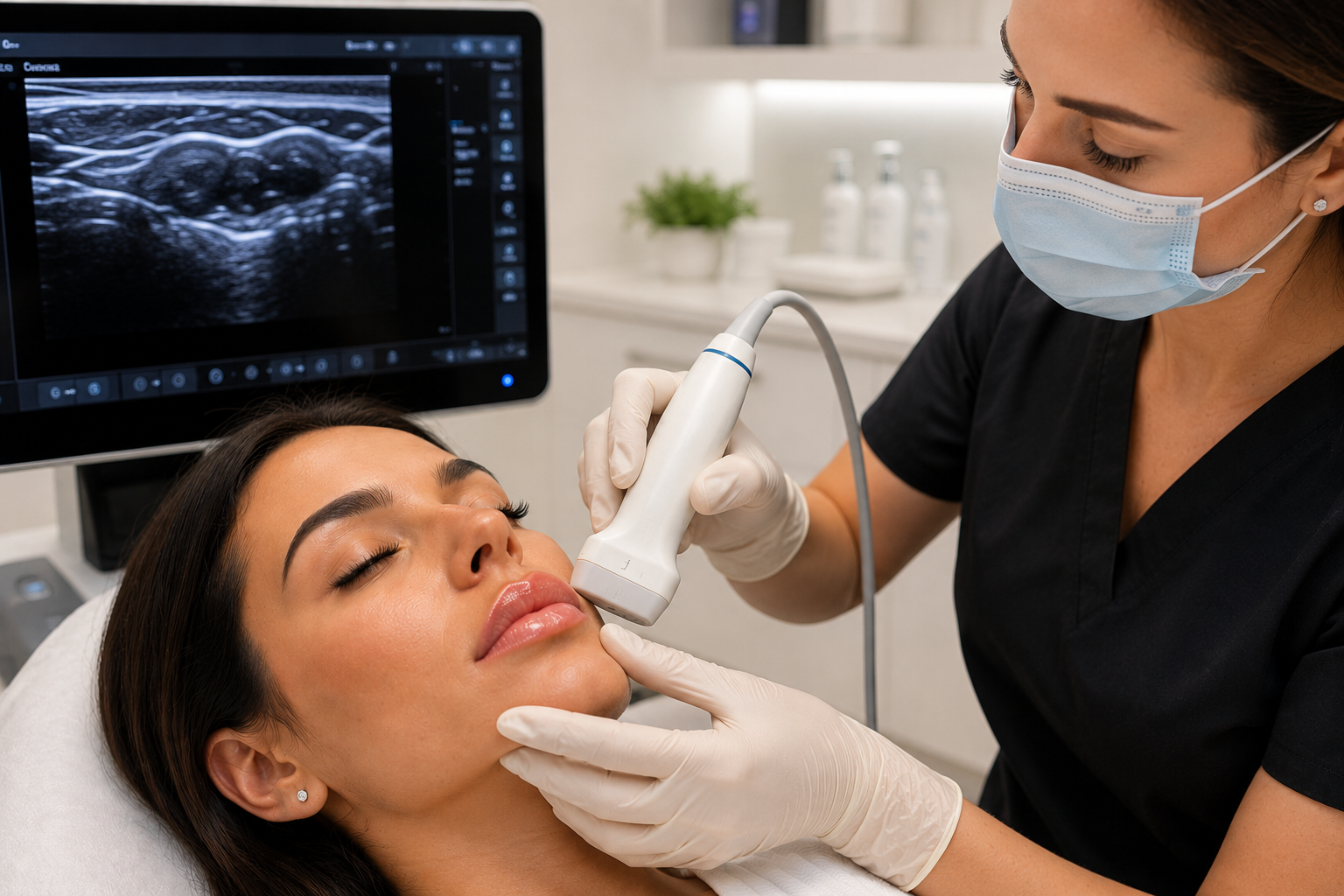
Ultrasound-Guided Assessment and Correction
Advanced imaging techniques can help identify the precise location and distribution of filler within the lips. Ultrasound evaluation allows practitioners to distinguish between filler accumulation, inflammatory nodules, vascular structures, and surrounding soft tissue.
This approach is particularly useful in complex correction cases or when previous filler placement is uncertain. Patients interested in advanced evaluation methods often review topics related to ultrasound-guided lip augmentation to understand how imaging improves precision and safety during corrective procedures.
Treating Inflammatory Reactions or Infection
Inflammatory nodules and infections require a different treatment strategy than simple filler malposition. Depending on the cause, management may involve antibiotics, corticosteroids, drainage, or filler dissolution. Delayed inflammatory reactions sometimes fluctuate over time and may require a combination of therapies to fully resolve.
Prompt evaluation is important whenever symptoms include increasing pain, redness, warmth, or progressive swelling. Early treatment helps reduce the risk of tissue damage and improves the likelihood of preserving a balanced cosmetic outcome.
Lip Filler Assessment and Correction at U Clinic Miami
Evaluating lumps after lip filler treatment requires careful assessment of both the filler itself and the surrounding tissue response. Because post-treatment irregularities can range from temporary swelling to more complex complications, determining the underlying cause is essential before recommending correction. A structured evaluation helps distinguish normal healing from issues such as migration, superficial placement, inflammatory nodules, or vascular compromise.
At U Clinic Miami, lip filler assessments are individualized based on the patient’s anatomy, treatment history, symptoms, and healing timeline. Factors such as filler type, injection depth, tissue quality, and movement patterns are considered when evaluating uneven texture or persistent nodules. This approach helps guide appropriate treatment recommendations while minimizing unnecessary intervention.
Corrective treatment planning may involve observation, conservative adjustment, enzymatic dissolution, or targeted correction depending on the specific findings. Maintaining natural lip movement and balanced proportions remains a priority during any revision procedure. Patients exploring broader injectable treatment options can review available dermal filler procedures to better understand how different products and techniques are selected for individualized outcomes.
Some patients seeking evaluation for lip filler irregularities are also interested in understanding how lip enhancement fits within a more comprehensive facial rejuvenation strategy. Additional treatment options can be explored through the clinic’s full range of cosmetic procedures, where minimally invasive approaches are tailored to facial anatomy and aesthetic goals.
Consultation provides an opportunity to assess persistent lumps, asymmetry, or concerns about filler placement in a controlled clinical setting. Careful evaluation of symptoms, healing progression, and filler behavior helps determine whether observation or corrective treatment is the most appropriate next step.
Are Lumps After Lip Fillers Usually Normal?
Lumps after lip fillers are often part of the normal healing process, particularly during the first days after treatment when swelling and inflammation are most pronounced. Temporary firmness, asymmetry, and uneven texture commonly improve as fluid retention decreases and the filler integrates more evenly into the surrounding tissue. Understanding this normal recovery pattern can help reduce unnecessary concern during early healing.
At the same time, persistent hard nodules, worsening pain, skin discoloration, or progressive swelling may indicate a complication that requires professional evaluation. Factors such as superficial placement, migration, inflammatory reactions, or vascular compromise can alter how filler behaves within the lips and affect both safety and cosmetic outcomes.
The distinction between normal healing and a true complication often depends on timing, symptom progression, and the physical characteristics of the lump itself. Early identification of concerning symptoms allows for more effective treatment and helps reduce the risk of long-term irregularities.
Careful product selection, precise injection technique, and appropriate aftercare all play important roles in minimizing the likelihood of post-treatment lumps. When concerns arise, professional assessment helps determine whether reassurance, monitoring, dissolution, or corrective treatment is the most appropriate course of action.