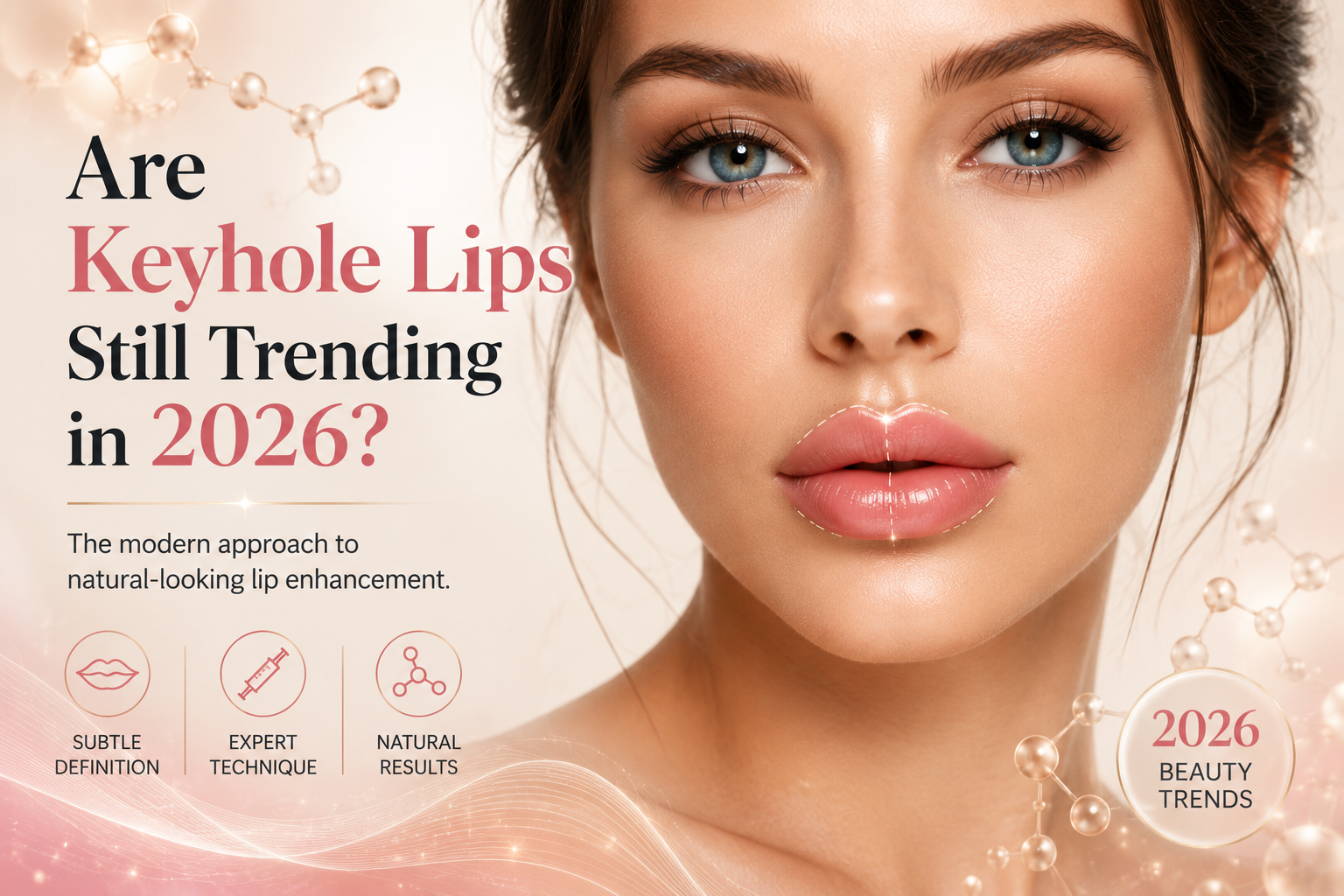
Full, contoured lips have remained one of the most requested cosmetic trends for more than a decade, but the preferred aesthetic has evolved significantly over time. Among the most recognizable lip filler styles was the “keyhole lips” look, characterized by a visible separation between the upper and lower lips at the center of the mouth. The appearance became widely associated with social media beauty trends and influencer-driven cosmetic standards.
While exaggerated lip filler styles dominated earlier trends, patient preferences in 2026 have shifted toward more balanced and natural-looking results. Many individuals now prioritize lip movement, facial harmony, and subtle enhancement rather than dramatic projection. Despite this change, keyhole lips have not completely disappeared. Some patients still request elements of the look, particularly a softly defined central separation that enhances lip shape without appearing artificial.
Modern lip augmentation techniques also differ from earlier approaches. Injectors now place greater emphasis on preserving natural anatomy and avoiding overfilled results. This transition has influenced how trends such as keyhole lips are interpreted and performed in clinical practice.
Patients researching evolving filler styles often compare current trends with previous lip augmentation techniques, including topics such as lip fillers for aging or thin lips and vermilion border definition, both of which reflect the broader movement toward refined and anatomically balanced lip enhancement.
What Are Keyhole Lips?
Keyhole lips describe a lip shape where a small gap remains visible between the center of the upper and lower lips when the mouth is slightly closed. The appearance creates the illusion of fuller projection and increased central volume. This look is typically achieved using dermal fillers that enhance the body of the lips while maintaining separation in the middle portion.
The aesthetic became especially popular during the peak of heavily contoured beauty trends, where dramatic lip definition and pronounced volume were widely promoted online. Social media filters, celebrity influence, and makeup contouring techniques contributed to the popularity of this specific lip shape. Over time, the term “keyhole lips” became associated with highly sculpted filler techniques rather than naturally occurring anatomy.
How Keyhole Lips Are Created
Keyhole lips are usually produced by strategically adding filler volume to the outer portions of the lips while preserving a central opening. Injectors often enhance the lateral body of the upper and lower lips to create a rounded appearance that frames the central gap.
Achieving this shape requires careful control of filler placement and projection. Excessive product in the wrong area may eliminate the separation completely or create an overfilled appearance. Because of this, injector technique plays a major role in determining whether the final result appears balanced or artificial.
Patients interested in customized lip shaping often undergo treatments such as lip filler treatment, where injection patterns are tailored to individual anatomy and desired lip contour.
Why Anatomy Matters
Not every patient is anatomically suited for pronounced keyhole lips. Natural lip proportions, philtrum length, dental structure, and tissue flexibility all influence whether the look can be achieved safely and naturally.
Some individuals naturally develop a subtle central separation after filler placement due to their lip shape. Others may require aggressive projection to create the effect, increasing the risk of unnatural movement or excessive fullness. Modern injectors generally evaluate whether the trend aligns with the patient’s facial balance rather than attempting to recreate exaggerated social media examples.
The Difference Between Subtle and Overdone Results
In 2026, many patients requesting keyhole lips are no longer seeking dramatic gaps between the lips. Instead, the trend has evolved toward softer contouring and subtle central definition. This creates dimension without producing an obviously artificial appearance.
Overly exaggerated keyhole lips are now less common because patients increasingly prioritize natural expression and facial harmony. Contemporary filler techniques tend to focus on improving shape and hydration while preserving normal lip movement.
Why Keyhole Lips Became Popular
The popularity of keyhole lips was closely tied to the rise of image-driven social media platforms and celebrity beauty culture. During the late 2010s and early 2020s, heavily contoured lips became one of the most recognizable cosmetic trends online. Defined lip borders, glossy finishes, and exaggerated projection were frequently associated with influencer aesthetics and edited photography.
At the same time, injectable treatments became more accessible and widely discussed in mainstream media. As lip filler procedures grew in popularity, distinct lip shapes such as Russian lips, heart-shaped lips, and keyhole lips became highly requested aesthetic styles.
Influence of Instagram and Celebrity Trends
Social media platforms played a major role in normalizing dramatic lip enhancement. Influencers and celebrities often showcased highly sculpted lips with pronounced central separation, creating demand for similar cosmetic results.
Filters and photo-editing tools also contributed to unrealistic beauty standards. Images posted online frequently exaggerated lip projection and contour, influencing patient expectations during consultations. In many cases, these appearances were difficult to reproduce naturally in real-life movement and lighting conditions.
Preference for Defined Lip Contours
Keyhole lips became associated with enhanced lip volume because the visible central separation created the illusion of projection. When combined with a sharply defined vermilion border and glossy makeup finishes, the lips appeared fuller and more sculpted.
This preference for contouring also increased interest in lip border enhancement techniques. Treatments focusing on lip outline refinement, such as vermilion border definition with fillers, became increasingly common during the height of the trend.
The Role of Makeup Techniques
Makeup trends amplified the appearance of keyhole lips even further. Overlining, strategic highlighting, and gloss placement enhanced the illusion of volume and central separation. In many cases, cosmetic contouring worked together with injectable fillers to create the final aesthetic.
As beauty trends evolved, however, many patients began shifting away from heavily contoured looks in favor of softer and more natural lip enhancement.
Is the Keyhole Lips Trend Still Popular in 2026?
Keyhole lips still exist as a requested aesthetic in 2026, but the trend has evolved considerably from its earlier versions. The exaggerated filler styles that once dominated social media are no longer considered the standard for modern lip augmentation. Instead, most patients now prefer natural volume, improved hydration, and balanced proportions that complement the rest of the face.
This shift reflects broader changes within aesthetic medicine, where subtle enhancement has become more desirable than dramatic transformation. Patients increasingly prioritize lip movement and long-term tissue health rather than highly sculpted appearances designed primarily for photographs.
The Move Toward Natural Lip Filler Results
Modern lip filler trends emphasize softness and anatomical balance. Rather than creating large amounts of projection, injectors now focus on maintaining natural lip proportions while subtly improving shape and definition.
This approach reduces the risk of overfilled appearance and improves how the lips move during speech and facial expression. Many patients who once requested dramatic contouring now prefer understated enhancements that are less obvious in everyday settings.
Why Some Patients Still Request Keyhole Lips
Although exaggerated styles are less common, subtle versions of keyhole lips remain popular among some patients. A small central separation can still create attractive lip definition when performed conservatively and in proportion to facial anatomy.
Patients interested in this aesthetic often request a softer variation rather than the pronounced gaps that characterized earlier trends. The modern interpretation typically prioritizes elegance and contour instead of excessive volume.
How Modern Injectors Modify the Trend
Injectors in 2026 frequently adapt the keyhole concept to suit contemporary preferences. Instead of aggressively separating the lips, providers may create gentle contouring through careful filler distribution along the lateral lip body and Cupid’s bow.
This refined approach maintains natural movement while still adding dimensionality to the lips. Advanced techniques also reduce the likelihood of migration or distortion associated with older overfilling practices. Patients concerned about these issues often research topics such as filler migration before pursuing treatment.
Social Media Trends vs Real-Life Appearance
One of the biggest changes in 2026 is the growing awareness of the difference between online aesthetics and real-world appearance. Lip filler styles designed for close-up photography may not always look natural during normal facial movement or conversation.
Patients now place greater emphasis on treatments that remain balanced under different lighting conditions and facial expressions. This shift has contributed to the decline of aggressively exaggerated lip shapes and encouraged more individualized treatment planning.
Risks of Overdone Keyhole Lip Filler Techniques
Although keyhole lips can be performed subtly, overly aggressive filler techniques may create both aesthetic and structural concerns. Excessive projection and exaggerated contouring can disrupt natural lip proportions, affect movement, and increase the likelihood of long-term complications.
Modern injectors generally avoid extreme shaping techniques because they may compromise facial harmony and produce results that appear artificial outside of edited social media images.
Excessive Projection and Migration Risk
Large filler volumes increase pressure within the lip tissue, making migration more likely over time. Product may gradually shift beyond the natural lip border, leading to distortion or uneven contour.
Patients pursuing highly exaggerated keyhole lips may also require repeated correction treatments if migration occurs. Understanding the causes of these changes helps patients make more informed decisions about long-term filler maintenance.
Unnatural Lip Movement
The lips are highly dynamic structures involved in speaking, eating, and facial expression. Excessive filler placement can interfere with these movements, creating stiffness or exaggerated projection during animation.
Modern aesthetic preferences increasingly favor lips that move naturally rather than appearing rigid or overfilled. This has contributed to the decline of extreme filler trends in recent years.
Long-Term Tissue Stretching Concerns
Repeated overfilling may gradually stretch the lip tissue, particularly when large filler volumes are maintained over time. While hyaluronic acid fillers are temporary, chronic overexpansion can affect how the lips appear after filler dissolves.
Patients concerned about long-term changes often research topics such as whether lip fillers permanently stretch the lips before deciding on repeated treatments.
Complications Associated With Aggressive Filler Placement
Overfilled lips may also develop irregular texture, asymmetry, or nodules beneath the skin. These complications are more likely when filler is repeatedly injected without respecting natural anatomical boundaries.
Patients experiencing irregularities sometimes explore corrective options discussed in what to do if you don’t like your lip filler results. Professional evaluation is important when determining whether adjustments or dissolving treatments are necessary.
Choosing a Lip Shape That Matches Your Facial Anatomy
Modern lip filler treatments increasingly focus on personalization rather than replicating temporary beauty trends. While keyhole lips remain recognizable in aesthetic medicine, most injectors now prioritize facial balance, natural movement, and proportional enhancement over dramatic contouring.
A successful lip augmentation plan depends on factors such as lip anatomy, skin elasticity, facial proportions, and individual aesthetic goals. Some patients naturally suit subtle central separation, while others achieve better results with softer contouring and balanced hydration.
Professional consultation allows injectors to evaluate which techniques align with the patient’s natural anatomy and long-term goals. Treatments such as dermal filler injections are often customized to improve shape and definition while preserving natural expression.
Patients considering lip enhancement can also benefit from consultation for lip filler procedures, where treatment planning focuses on creating results that remain balanced both in photographs and in everyday facial movement.
Are Keyhole Lips Still Trending in 2026? Final Thoughts
Keyhole lips have not completely disappeared in 2026, but the trend has evolved significantly from its earlier, more exaggerated versions. While some patients still request subtle central lip separation, the broader movement within cosmetic aesthetics now favors natural-looking enhancement and balanced facial proportions.
Modern lip filler techniques prioritize softness, symmetry, and realistic movement rather than dramatic contouring designed primarily for social media imagery. This shift reflects changing patient preferences and greater awareness of long-term filler maintenance and anatomical harmony.
For patients considering lip augmentation, individualized treatment planning is more important than following temporary beauty trends. A carefully tailored approach allows injectors to create lip shapes that complement natural anatomy while maintaining a refined and timeless appearance.