Facial aesthetics often involve more than enhancing a single feature. While lip fillers can improve volume, shape, and definition, they are frequently incorporated into broader treatment plans designed to create balanced facial proportions and address multiple signs of aging at the same time. Combining complementary procedures allows practitioners to improve facial harmony while maintaining results that appear natural rather than overtreated.
Different cosmetic treatments target different aspects of facial aging and appearance. Hyaluronic acid fillers restore lost volume, neuromodulators relax muscles responsible for dynamic wrinkles, laser procedures improve skin tone and pigmentation, and collagen-stimulating therapies enhance skin quality over time. Because these treatments work through separate mechanisms, they can often be performed together as part of a comprehensive aesthetic strategy.
Successful combination therapy requires careful planning rather than simply performing multiple procedures during the same appointment. Factors such as treatment sequencing, recovery time, medical history, and facial anatomy all influence which procedures are appropriate to combine. Patients comparing injectable options often find it helpful to understand the differences discussed in Lip Flip vs Lip Filler, since each treatment serves a different purpose and may be incorporated into a customized plan.
The goal of combination treatment is not to dramatically change facial appearance but to improve overall balance while preserving natural expression. Selecting compatible procedures and scheduling them appropriately helps maximize treatment outcomes, reduce downtime, and support long-term facial rejuvenation.
Why Combination Treatments Are Becoming More Common
Modern cosmetic medicine increasingly focuses on comprehensive facial rejuvenation rather than treating isolated concerns. Instead of correcting only one wrinkle or adding volume to a single area, practitioners often evaluate how different facial features interact with one another. This broader approach allows treatment plans to address facial balance, skin quality, and age-related changes simultaneously while maintaining natural-looking results.
As aesthetic techniques and injectable products have become more refined, patients are also seeking subtle improvements that enhance overall appearance rather than creating dramatic changes. Combination therapy makes this possible by allowing multiple treatments to complement one another instead of relying on a single procedure to achieve every aesthetic goal.
Treating the Face as a Whole
The face functions as a connected aesthetic unit rather than a collection of individual features. Enhancing one area without considering surrounding structures may produce results that appear disproportionate or incomplete. For example, fuller lips may not achieve the desired improvement if surrounding fine lines, skin texture, or facial volume loss remain untreated.
During facial assessment, practitioners evaluate relationships between the lips, cheeks, chin, jawline, nose, and surrounding skin. This comprehensive analysis helps determine whether additional procedures may improve overall harmony while maintaining natural proportions. Rather than focusing solely on increasing lip volume, treatment planning considers how the lips contribute to facial balance during both rest and expression.
This approach has become increasingly important because patients often seek results that are noticeable without appearing artificial. Conservative enhancement across multiple areas frequently produces a more youthful appearance than aggressive treatment of a single feature. Patients interested in individualized enhancement strategies can learn more about available lip filler treatments, where product selection and treatment planning are customized according to facial anatomy.
Treating the face as a whole also allows practitioners to prioritize procedures based on the patient’s concerns and long-term goals. Some individuals benefit most from improving skin quality before adding volume, while others may first address muscle-related wrinkles before refining facial contours. Developing a structured treatment sequence often leads to more predictable outcomes than attempting to correct every concern independently.
Benefits of Combination Therapy
One of the primary advantages of combination treatment is that different procedures target different biological processes involved in facial aging. Lip fillers restore volume and improve contour, while neuromodulators reduce muscle activity responsible for expression lines. Laser treatments improve pigmentation and skin texture, and collagen-stimulating procedures strengthen the structural support of the skin over time.
Addressing several factors simultaneously often produces more comprehensive aesthetic improvement than relying on one treatment alone. For example, improving skin quality around the mouth may enhance the appearance of lip fillers without requiring additional filler volume. Likewise, relaxing muscles that contribute to fine lines can improve overall facial balance while allowing the lips to remain the focal point of enhancement.
Combination therapy may also improve treatment efficiency. Depending on the procedures selected, multiple concerns can sometimes be addressed during the same appointment or within a coordinated treatment schedule. This approach may reduce the total number of office visits while allowing recovery periods to overlap when medically appropriate.
Another important benefit is treatment customization. Because every patient’s facial anatomy and aging pattern differ, practitioners can combine procedures based on individual goals rather than following a standardized protocol. This flexibility allows treatment plans to evolve over time as aesthetic priorities change.
Patient Assessment Before Combining Procedures
Not every cosmetic procedure should be combined during the same visit. A thorough consultation helps determine which treatments are compatible and whether they should be performed together or staged over several appointments. Medical history, previous cosmetic procedures, medications, allergies, and healing characteristics all influence treatment planning.
Practitioners also evaluate the condition of the skin, soft tissue quality, muscle activity, and facial proportions before recommending combination therapy. These findings help determine which concerns should be addressed first and which procedures may complement one another most effectively.
Recovery considerations are equally important. While some treatments produce minimal downtime, others may temporarily increase swelling, bruising, or skin sensitivity. Proper sequencing helps minimize recovery challenges while allowing each procedure to achieve its intended effect without interfering with subsequent treatments.
Patient expectations are another essential component of assessment. Some individuals prioritize subtle enhancement with minimal downtime, while others seek broader facial rejuvenation over multiple treatment sessions. Establishing realistic goals and a structured treatment plan helps create predictable, natural-looking outcomes while maintaining patient safety throughout the treatment process.
Which Treatments Can Be Combined With Lip Fillers?
Lip fillers can often be combined with other cosmetic procedures because they address only one aspect of facial aesthetics. While fillers improve lip volume, contour, and definition, they do not reduce dynamic wrinkles, tighten loose skin, improve pigmentation, or stimulate significant collagen remodeling. Combining treatments that work through different mechanisms allows practitioners to develop a more comprehensive facial rejuvenation plan while maintaining natural-looking results.
The suitability of combination therapy depends on several factors, including the patient’s anatomy, medical history, recovery timeline, and aesthetic objectives. Some procedures can safely be performed during the same appointment, whereas others may require spacing treatments to allow proper healing. Individualized treatment planning helps determine the safest sequence while maximizing the overall cosmetic outcome.
Lip Fillers and Botox
Lip fillers and Botox are among the most frequently combined injectable treatments because they target different concerns. Hyaluronic acid fillers restore volume and improve lip shape, while Botox temporarily relaxes muscles responsible for dynamic facial wrinkles. When used together, these treatments can enhance both lip appearance and the surrounding facial structures without creating an exaggerated result.
One common combination involves treating vertical lip lines, sometimes referred to as smoker’s lines, with Botox while using filler to restore lip definition and volume. Relaxing the muscles around the mouth can reduce repetitive skin folding, while filler provides structural support for the lips themselves. This combination often creates a smoother transition between the lips and surrounding skin.
Botox may also be incorporated through a lip flip procedure, which relaxes a portion of the orbicularis oris muscle to allow the upper lip to roll slightly outward. Unlike filler, a lip flip does not increase lip volume but can improve upper lip visibility during smiling. Patients comparing these approaches often find it helpful to review the differences discussed in Lip Flip vs Lip Filler, as each treatment serves a distinct purpose and may be used independently or together.
Beyond the lips, Botox is frequently used to soften forehead lines, frown lines, and crow’s feet. Treating these areas while enhancing the lips can improve overall facial balance by addressing multiple signs of aging simultaneously. Rather than focusing attention on a single feature, combination treatment often produces a more harmonious appearance across the entire face.
Lip Fillers With Laser Treatments
Laser procedures are commonly combined with lip fillers because they improve skin quality rather than facial volume. While fillers enhance the lips themselves, laser treatments address concerns such as pigmentation, uneven skin tone, sun damage, and superficial textural irregularities. These complementary mechanisms allow both treatments to contribute to a more comprehensive aesthetic outcome.
Laser lip lightening has become increasingly popular for individuals with naturally darker lip pigmentation or pigmentation caused by environmental factors. Improving lip color while enhancing lip shape can produce a more balanced overall appearance without requiring additional filler volume. Patients interested in this combination can learn more about treatment sequencing in Combining Lip Fillers With a Laser Lip Lightening Treatment.
Depending on the type of laser being used, practitioners may recommend performing laser treatment before filler placement or allowing sufficient healing between procedures. Fractional resurfacing lasers, pigment-targeting lasers, and vascular lasers each produce different tissue responses that may influence treatment scheduling.
Laser procedures may also improve the appearance of fine lines around the mouth by stimulating collagen remodeling. When combined appropriately with lip fillers, improvements in both lip volume and surrounding skin quality can contribute to a more youthful appearance without overcorrecting either concern.
Lip Fillers With Skin Rejuvenation Procedures
Skin rejuvenation treatments can complement lip fillers by improving collagen production, skin texture, and overall tissue quality. Unlike fillers, which provide immediate volume enhancement, these procedures stimulate gradual biological changes within the skin that continue to develop over several weeks or months.
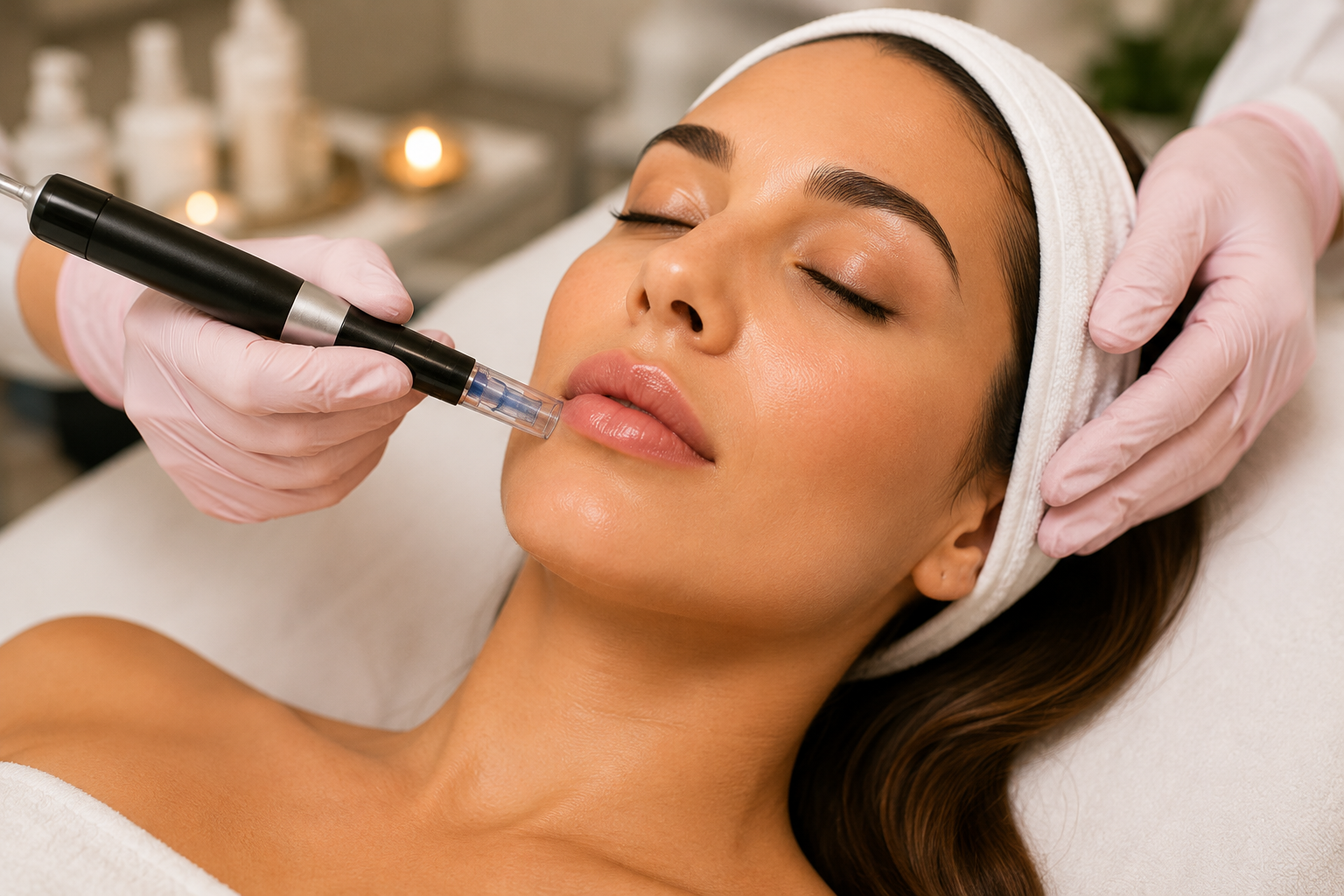
Microneedling is commonly used to stimulate collagen and elastin production through controlled micro-injuries in the skin. Improved collagen support may enhance the appearance of the skin surrounding the lips, particularly when fine lines or early signs of aging are present. Patients considering broader skin improvement can explore available microneedling treatments as part of a comprehensive facial rejuvenation plan.
Radiofrequency microneedling procedures such as Morpheus8 combine controlled heat with microneedling to promote tissue remodeling and skin tightening. These treatments are generally directed toward improving skin laxity and texture rather than increasing lip volume, making them complementary to filler injections rather than competing procedures.
Platelet-rich plasma therapy is another option that may support tissue regeneration and skin quality. PRP facial rejuvenation utilizes growth factors derived from the patient’s own blood to encourage tissue repair and collagen production. While PRP does not replace lip fillers, it may complement injectable treatments by improving the quality of surrounding skin and supporting overall facial rejuvenation.
Lip Fillers With Other Dermal Fillers
Lip enhancement is often only one component of facial volume restoration. Aging frequently affects multiple facial regions simultaneously, including the cheeks, chin, jawline, temples, and nasolabial folds. Treating these areas together can improve facial proportions more effectively than focusing exclusively on the lips.
For example, restoring cheek volume may improve midface support, indirectly enhancing how the lips relate to the rest of the face. Chin augmentation with filler can strengthen the lower facial profile and improve balance between the lips and jawline. Similarly, treating the marionette lines or nasolabial folds may create smoother transitions around the mouth without requiring excessive lip volume.
Because different facial regions require fillers with different physical properties, practitioners often select products based on the specific anatomical area being treated. Softer formulations may be preferred for the lips, while firmer products provide structural support in the cheeks or chin. Patients interested in understanding how different injectable products are selected can review the clinic’s approach to dermal filler treatments, where treatment planning is individualized according to facial anatomy and aesthetic goals.
Combining fillers across multiple facial regions requires careful attention to proportion, symmetry, and natural movement. Conservative treatment across several areas often produces a more balanced and refreshed appearance than placing excessive filler into a single feature.
Timing and Safety Considerations
Although many cosmetic treatments can complement lip fillers, successful outcomes depend on more than selecting compatible procedures. The timing of each treatment, expected healing response, and individual patient factors all influence whether procedures should be performed during the same appointment or scheduled separately. Careful planning helps minimize complications, reduce downtime, and ensure that the final aesthetic result reflects the patient’s long-term goals.
Different treatments create different biological responses within the skin and soft tissues. Injectable procedures, laser therapies, and collagen-stimulating treatments each have unique recovery timelines that should be considered before developing a comprehensive treatment plan. Coordinating these procedures appropriately allows each treatment to achieve its full effect without interfering with healing from another procedure.
Same-Day vs Staged Treatments
Some cosmetic procedures can be safely performed during the same visit, while others are better separated by several days or weeks. Injectable treatments such as lip fillers and Botox are frequently combined because they target different anatomical structures. Botox affects muscle activity, whereas hyaluronic acid fillers restore volume, allowing both treatments to complement one another without competing for the same tissue.
Other procedures require more careful scheduling. Treatments that create controlled skin injury, including laser resurfacing, medium-depth chemical peels, or radiofrequency microneedling, may temporarily increase inflammation around the lips and surrounding skin. Performing fillers immediately after these procedures may complicate healing or make treatment outcomes more difficult to evaluate.
The order of treatment also matters. In many situations, practitioners recommend completing resurfacing procedures before adding dermal fillers, allowing the skin to heal fully before injectable treatment. In other cases, fillers may be performed first, followed by skin rejuvenation after sufficient recovery. The appropriate sequence depends on the type of procedure, treatment area, and desired aesthetic outcome.
Scheduling procedures strategically also allows practitioners to accurately assess the results of each treatment. Waiting for swelling to resolve before performing additional procedures makes it easier to determine whether further enhancement is necessary, reducing the likelihood of overcorrection.
Recovery Planning
Recovery should be considered just as carefully as the procedures themselves. While lip fillers involve relatively little downtime, temporary swelling, bruising, and tenderness are common during the first several days after treatment. Combining multiple procedures may extend the recovery period or temporarily increase inflammation, making appropriate scheduling especially important for patients preparing for travel, photography sessions, or special events.
Patients are generally advised to avoid unnecessary pressure on the lips immediately after treatment. Activities such as vigorous exercise, prolonged heat exposure, or sleeping face down may contribute to additional swelling during the early healing period. Individuals interested in optimizing recovery can review recommendations discussed in How to Sleep After Lip Filler Treatments for Optimal Healing, which outlines practical measures that may help reduce post-procedural swelling.
Planning treatments around social and professional commitments can also improve the overall experience. Although many patients resume normal activities quickly, allowing adequate time for bruising and swelling to subside helps ensure that final results are visible before important occasions. For more extensive combination treatments, practitioners may recommend spacing procedures to reduce cumulative downtime.
Follow-up appointments are another important aspect of recovery planning. These visits allow practitioners to evaluate healing, assess treatment results, and determine whether any refinements or additional procedures are appropriate once the initial recovery period has ended.
Who May Need Modified Treatment Plans
Not every patient is an ideal candidate for combining multiple cosmetic procedures during the same treatment session. Certain medical conditions, medications, and physiological factors may require adjustments to the treatment plan in order to maximize safety and minimize the risk of complications.
Patients taking blood-thinning medications or supplements may have an increased likelihood of bruising following injectable treatments. Whenever medically appropriate, reviewing medications before treatment can help reduce this risk. Individuals preparing for lip augmentation often review recommendations outlined in Should I Avoid Certain Medications Before Lip Fillers? to better understand pre-treatment considerations.
A history of recurrent cold sores is another factor that may influence treatment planning. Lip injections can occasionally trigger herpes simplex virus reactivation in susceptible individuals. Preventive antiviral medication may be recommended before treatment for patients with a known history. Additional information is available in What to Know About Cold Sores After Lip Fillers.
Certain autoimmune conditions may also require individualized assessment before combining cosmetic procedures. Although injectable treatments remain appropriate for many patients, underlying immune disorders, medications, and disease activity should be considered when determining treatment timing and product selection. Patients with these concerns may find it helpful to review guidance provided in Can I Get Lip Fillers if I Have a History of Autoimmune Disease?.
By tailoring treatment schedules to each patient’s medical history, facial anatomy, and recovery characteristics, practitioners can safely combine cosmetic procedures while maintaining predictable outcomes and minimizing unnecessary risk.
Are Combination Treatments With Lip Fillers Right for You?
Combining lip fillers with other cosmetic treatments can provide more comprehensive facial rejuvenation than treating a single concern in isolation. While lip fillers enhance volume, shape, and definition, complementary procedures such as Botox, laser therapies, microneedling, PRP, and dermal fillers address other aspects of facial aging, including dynamic wrinkles, skin texture, pigmentation, and volume loss. When these treatments are carefully coordinated, they can work together to create balanced, natural-looking results.
The success of combination therapy depends on thoughtful treatment planning rather than simply performing multiple procedures at once. Factors such as facial anatomy, skin condition, medical history, recovery time, and aesthetic goals all influence which treatments are appropriate and how they should be scheduled. Individualized assessment helps determine the safest sequence while reducing the likelihood of unnecessary downtime or complications.
A conservative, personalized approach also helps preserve natural facial movement and proportion. Instead of relying on a single treatment to produce dramatic changes, combining complementary procedures often allows smaller refinements across multiple areas of the face. This strategy can improve overall facial harmony while maintaining expressions and features that look authentic rather than overtreated.
For individuals considering lip fillers as part of a broader facial rejuvenation plan, a professional consultation provides the opportunity to evaluate treatment options based on individual anatomy and long-term goals. Developing a customized combination treatment plan helps ensure that each procedure complements the others, resulting in balanced, predictable, and natural aesthetic outcomes.